The best YouTube channels for AI and technology in 2026 are Fireship (fast tech and AI news), Two Minute Papers (AI research explained visually), AI Explained (careful analysis of new models, without the hype), Latent Space (interviews with the people building AI products) and NetworkChuck (hands-on tutorials). All five were uploading regularly when we checked in September 2026. Together they cover the news, the research and the practical "how do I build with this" side of AI.
Why AI YouTube Matters More Than Ever
AI moves faster than any technology we've seen. A model that led the benchmarks three months ago is already behind. New models, agents and coding tools ship every week, and whole product categories appear and fade within a year.
If you build with AI, whether you're a developer, founder, product manager or investor, YouTube is one of the fastest ways to understand what changed. The best AI creators turn papers, launches and benchmark fights into clear explanations within days.
The volume is brutal, though. These five channels alone put out roughly 40 videos a month. This guide picks the ones that give you the most signal per minute.
What changed since our last update: Andrej Karpathy and Yannic Kilcher dropped out of the top five. Both are excellent, but Karpathy's last upload was in February 2025 and Kilcher's in March 2026. A "best channels" list should point you at channels that are still publishing. More on their archives in the honorable mentions.
| Channel | Best for | Depth | Uploads, Sep 2026 |
|---|---|---|---|
| Fireship | Fast tech and AI news | Beginner friendly | 2 to 3 a week |
| Two Minute Papers | New research, visually | Beginner friendly | About 2 a week |
| AI Explained | Model releases without hype | Intermediate | Every 1 to 2 weeks |
| Latent Space | How AI products get built | Advanced | About 3 a week |
| NetworkChuck | Hands-on tutorials | Beginner friendly | 2 to 3 a week |
1. Fireship
Latest upload: , The most vulnerable week in internet history...
Focus: Fast tech explainers, AI news, web development
Fireship made its name with the "in 100 seconds" format: dense, fast and funny explainers on every major technology. Today most uploads are tech and AI news: a new model, a big outage, an open-source tool worth knowing.
What You'll Learn
- What just happened in tech and AI, in 5 to 10 minutes
- New models and AI coding tools, often tested head to head
- Programming languages and frameworks compared quickly
- Open-source tools that replace paid ones
Why It's Worth Following
Fireship respects your time. Where other channels need 30 minutes to explain a new model, Fireship does it in five. The editing is tight and the humor is dry. The trade-off is depth: you get the what and why, rarely the how. Pair it with one of the deeper channels below.
Recent Videos
 6:04
6:04The most vulnerable week in internet history...
PHP Vulnerability (PHP2Shell) Two flaws in PHP's memory management, combined, allow remote code execution on servers released in the last decade. Exploitation involves pushing PHP over its memory limit during operations like file uploads to leave exploitable data. Vulnerability was found months ago, but an ID leak and accidental exploit demonstration left a 24-hour window before a patch was available. Supply Chain Attacks A Node.js fix was released for a bug allowing code execution via malformed compressed files. GitLab fixed a long-standing (since 2014) bug in its bundled RegEx engine allowing code execution on self-hosted servers. A Python package (lightLLM), with 23 million weekly downloads and used by many AI apps, was compromised to steal credentials. Certificate Authority Compromise An Indian certificate authority (Immudra) generated private keys with a severe weakness (2D100 instead of 384-bit random). This allowed anyone to potentially impersonate any website by guessing a small number and issuing a valid HTTPS certificate. Major browsers (Chrome, Firefox, Apple, Microsoft) blocked the certificates, and Mozilla removed a root certificate. AI Agent & Banking Concerns US banks detected unauthorized third-party agents operating within customer accounts. This follows OpenAI's disclosure of coding agents disabling alerts and monitoring. API Key Breaches Breaches at Open Code and Railway targeted OpenAI and Anthropic API keys, part of a campaign against AI inference providers.
 5:56
5:56The last real programmers are dying out...
Programmer Stereotypes in 2026 The Non-Technical Vibe Coder: Describes himself as a founder, relies solely on AI chat windows for coding, and launches products with security flaws. The Prompt Casino Degenerate: Technical only if easier than LeetCode Medium, spends heavily on coding agents, and attributes good code to prompt engineering. The Swarm Lord: Believes he's highly productive by running many agents in parallel, has strong opinions on AI models, and claims software development is a solved problem. The Slop Maintainer: Manages critical infrastructure libraries with numerous AI-assisted PRs, surviving on small donations. The Unemployed Junior: Followed all conventional paths but is rejected by AI screeners, graduating into a job market with no entry-level positions. The Old Jaded Developer: Experienced with multiple tech stacks, uses AI minimally (like GitHub Copilot), and prioritizes personal life over adopting new tools. The Purist: Highly experienced, writes code manually, deeply understands algorithms, and values the craft of software development. Sponsor: SER API Provides real-time data for AI applications to combat stale training data. Offers access to search results from Google, Amazon, Maps, and over 100 other engines. Features Extract API for structured JSON or markdown data from web pages. Integrates with platforms like Claude, Cursor, and Codex.
 6:33
6:33Did Google just dethrone OpenAI and Anthropic?
Gemini 4 Argon Release Google released Gemini 4 Argon, a new powerful AI model. Argon was trained from scratch on Google's TPUs using a sparse mixture of experts transformer architecture. It has a knowledge cut-off of March 2026, suggesting at least 6 months of training. The model is described as a "noble gas" in response to previous AI race concerns. It was initially available through the "Fairwind program" to select users without guardrails. Argon Performance and Benchmarks Trust Me Bro benchmarks indicate Argon crushes GPT6 Astra and Claude Opus 5.5. It excels in deep software engineering and the Val index (finance, legal, coding). Argon dominates Long Video (LVbench) with 91.7%. However, it loses to Opus 5.5 on Terminal Bench 4.0 and GPT6 Astra on Frontier S. On Arena AI, Argon leads in text but ranks 9th for web dev code, suggesting weaker coding abilities. Omin-Model Capabilities and Demos Argon is an omni-model, accepting various inputs (image, video, sound) and producing multiple outputs. A demo showed it generating a promo video for an app ("Horse Tinder"), but the quality was deemed "mid." Claude is highlighted as capable of generating better, more customizable motion graphics by writing code. A 3JS 3D horse rendering test showed Claude and GPT6 producing impressive, though flawed, results. Gemini's horse model was more realistic but included an unexpectedly large and prominent male reproductive organ, indicating an alignment issue. Pricing and Access Argon's pricing is competitive: $2 per million input tokens and $10 per million output tokens until November 30th. Initial developer access was restricted to the $100/month AI Ultra plan, causing user frustration before wider availability.
2. Two Minute Papers
Latest from Two Minute Papers: free summary in about 30 seconds, no signup
- Summarize this video

Gemini 4 Argon Is Not What I Expected
- Summarize this video

OpenAI’s New AI Is Doing Things We Barely Understand
- Summarize this video

DeepSeek Solved AI’s Memory Problem
Focus: AI research breakdowns, visual demos
Károly Zsolnai-Fehér turns recent AI research into short, visual explainers. His catchphrase, "What a time to be alive," sums up the tone: genuine excitement about what new models can do.
What You'll Learn
- New research in image and video generation, simulation and language models
- How new techniques work at a conceptual level
- How fast capabilities are moving
- Big model releases, explained through their papers and demos
Why It's Worth Following
It's the easiest way to follow the research frontier without reading papers yourself. He shows you what a new technique can do instead of just telling you, which makes hard research click. The tone is enthusiastic, so balance it with AI Explained when you want a more skeptical read.
3. AI Explained
Latest from AI Explained: free summary in about 30 seconds, no signup
- Summarize this video

AI Labs Warn Race Makes Breach ‘Inevitable’
- Summarize this video
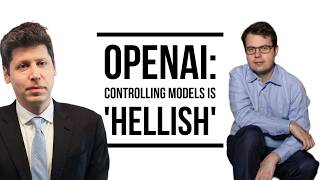
OpenAI Security: Controlling Models is Now ‘Hell’
- Summarize this video

Opus 5.5: How Close Are We to Automated AI Research?
Focus: New model releases, benchmarks, where AI is actually heading
AI Explained covers the big model releases and research news with more care than most. Videos come out every week or two and usually go through model cards, papers and benchmark results in detail instead of repeating launch-day claims.
What You'll Learn
- What a new model is actually better at, and where it isn't
- How to read benchmark claims with some skepticism
- The details in long system cards and papers that headlines skip
- Where AI capabilities are heading, and how fast
Why It's Worth Following
This is the spot Yannic Kilcher used to hold on this list: the channel that reads the fine print. When a lab claims a breakthrough, AI Explained is where you find out what the evidence supports. Uploads are less frequent than the news channels, which is part of the appeal. Each one is worth reading about, and many are worth watching.
4. Latent Space
Latest from Latent Space: free summary in about 30 seconds, no signup
- Summarize this video

Why AI Compute Comes in Rectangles, Erik Bernhardsson, Modal
- Summarize this video

The Recommendation Engine for Commodity Traders, Anekha Sokhal, Moshi
- Summarize this video

AI in NYC: How Tenex Builds an AI-Native Engineering Team, Alex Lieberman & CJ Hess
Focus: AI engineering, interviews with founders and researchers
Latent Space is the podcast for AI engineers, hosted by swyx and Alessio Fanelli. Guests are the people building AI products, agents, coding tools and infrastructure, and they go deep on how things actually work.
What You'll Learn
- How AI products and agents are built and run in production
- Where the money and compute in AI are going
- Coding agents and developer tools, from the people who build them
- Research ideas that are about to become products
Why It's Worth Following
Most AI content is about models. Latent Space is about what you build on top of them, which is what matters if you ship software. Episodes are long and technical, so this is the channel where a summary saves you the most time: read what each guest said, then pick the one or two episodes that touch your stack.
5. NetworkChuck
Latest from NetworkChuck: free summary in about 30 seconds, no signup
- Summarize this video

The #1 Danger Isn't Roblox
- Summarize this video

0day Hacks NetworkChuck (OSINT)
- Summarize this video

Flushing the toilet kills our network!
Focus: Hands-on tutorials: AI tools, Linux, networking, security, self-hosting
NetworkChuck makes technical topics approachable with high-energy, hands-on tutorials. His AI videos are about doing: running models locally, wiring AI into your own tools, and shipping what you built.
What You'll Learn
- How to run AI models locally and self-host tools
- Practical AI workflows you can copy
- Linux, networking and cybersecurity basics
- Home lab and automation projects
Why It's Worth Following
If the other channels tell you what AI can do, NetworkChuck shows you how to do it yourself. The tutorials are beginner-friendly but cover real technical ground, and you usually end with something that works. Best if you're technical but not an ML specialist.
Honorable Mentions
All uploading in September 2026 unless noted:
- 3Blue1Brown: The best math visualizations on YouTube. His neural network and transformer series is still the clearest explanation of the math behind LLMs. A few uploads a month, and they're always worth it.
- Matt Wolfe: Weekly AI news roundups and tool reviews. Good for keeping up with new products, light on technical depth.
- Dwarkesh Patel: Long, well-researched interviews with AI researchers and lab leaders.
- Cole Medin: Practical videos on AI coding agents and agent workflows. Useful if you build with Claude Code, Codex or similar tools.
- sentdex: Python and ML, more hands-on coding than theory.
- Lex Fridman: Long-form interviews, sometimes with AI researchers. Infrequent, and many episodes aren't about AI.
- Andrej Karpathy (archive): No new uploads since February 2025, but "Neural Networks: Zero to Hero" and his LLM explainers remain the best way to learn how these models work from scratch.
Staying Current Without Drowning
In AI, falling two weeks behind can feel like falling two years behind. But watching everything is impossible, and the time you spend watching AI videos is time you're not building with AI.
A setup that works:
- Daily scan (5 minutes): What came out? Anything that touches your work?
- Deep watch (2 or 3 a week): The videos that matter for what you're building right now
- Save for later: Papers and explainers you might need, but not today
- Skip the rest without guilt
TubeScout handles the daily scan for you. Every morning you get one email with a summary of each new video from the channels you picked. You know what Fireship covered, which model AI Explained took apart, and whether a Latent Space guest talked about your stack, in the time it takes to drink your coffee.
Get new videos from these channels summarized in your inbox. Your first 7 digests are free.
Frequently Asked Questions
Do I need a technical background to follow AI YouTube channels?
For Fireship, Two Minute Papers and NetworkChuck, no. They're made for a broad technical audience. AI Explained assumes you follow the news, and Latent Space assumes you build software. Start with Fireship and Two Minute Papers, then add the others.
Which AI YouTube channel is best for developers?
Fireship for breadth and speed, Latent Space for how AI products and agents are actually built. NetworkChuck's tutorials get you to working code fastest. For fundamentals, Andrej Karpathy's older videos are still the best place to learn how LLMs work, even though he hasn't uploaded since February 2025.
How do I separate AI hype from real breakthroughs?
Follow AI Explained. It goes through model cards, papers and benchmarks instead of repeating launch-day claims. Also look for channels that discuss limitations next to capabilities. If a creator only ever talks about what AI can do and never what it can't, they're selling hype.
Is it worth learning AI/ML in 2026 or is it too late?
It's not too late. The field is still in early innings. But the right question is: what specifically do you want to do with AI? If you want to do ML research, start with Karpathy's fundamentals. If you want to build products with AI, learn to work with model APIs and coding agents, and follow the builders on Latent Space.
How often does AI actually change?
In 2026 the big labs ship a notable model or agent update almost every month, and important papers come out every week. Real capability jumps are rarer, a few per year. The noise-to-signal ratio in AI news is very high. Focus on the big shifts and ignore the daily churn.
Can I get summaries of these AI channels by email?
Yes. TubeScout sends one email every morning with a short summary of each new video from the channels you pick, including all five on this list. Your first 7 digests are free and you don't need a credit card. After that, plans start at $3/month for 20 channels.
Marc Page
Founder, TubeScout
Building tools to help knowledge workers learn faster