The best YouTube channels for business and entrepreneurship in 2026 are Alex Hormozi (offers, sales and scaling), Greg Isenberg (startup ideas and AI-era businesses), My First Million (business trends and founder stories), Codie Sanchez (buying "boring" businesses) and Ali Abdaal (building a creator business). All five were still uploading every week when we checked in September 2026, and each one gives you something you can apply the same week.
Why Business YouTube Is Worth Your Time in 2026
The best business education used to cost six figures and two years at an MBA program. Now it's free, uploaded weekly, and taught by people who actually run companies.
The problem isn't access. It's volume. In September 2026 these five channels alone put out well over 100 uploads between them, counting Shorts and podcast clips. Nobody has time for that.
This list cuts through the noise. Each channel earns its spot on three criteria:
- Practitioner-led: The host runs or has run real businesses, not just talks about them
- Actionable: You can apply something from a typical video within a week
- Still active: Every channel here uploaded in the last two weeks of September 2026. We re-check the list, and the "Latest upload" line under each channel updates automatically from YouTube.
| Channel | Best for | Format | Uploads, Sep 2026 |
|---|---|---|---|
| Alex Hormozi | Offers, pricing, sales | Short tactical videos, Shorts | Daily or more |
| Greg Isenberg | Startup ideas, AI tools for founders | Interviews, brainstorms | 2 to 3 a week |
| My First Million | Business models, founder stories | Podcast + clips | Almost daily |
| Codie Sanchez | Buying small businesses | Explainers, deal breakdowns, Shorts | Daily or more |
| Ali Abdaal | Creator and online businesses | Essays, experiments | About 2 a week |

Focus: Offers, pricing, sales, scaling a business
Alex Hormozi built and sold several companies and now runs Acquisition.com. His channel breaks down the mechanics of business growth with very little filler.
What You'll Learn
- How to structure an offer people find hard to refuse (the core of his book $100M Offers)
- Sales frameworks for service businesses, SaaS and agencies
- Hiring, delegation and operational scaling
- The math behind customer acquisition cost and lifetime value
Why He's Worth Following
Hormozi doesn't do motivational content. A typical video is one specific tactic: how to price a service, structure a guarantee, or check whether a marketing channel pays for itself. The density is high, a 15-minute video often holds what other creators stretch into an hour. The catch is volume: he posts so many Shorts and clips that the good long-form videos get buried. That's exactly where a daily summary helps.
Recent Videos
 15:56
15:56How I Would Build a Personal Brand in 2027 (If I Had to Start Over)
Stage 1: Do Epic Build real skills, accomplishments, or unique opinions before creating content. Proof of your abilities is crucial; decades of experience with 6 months of content > 6 months of experience with a decade of content. Provide value by offering "cliff notes" of complex subjects, saving people time. Demonstrate value through accomplishments or by showing extensive work (e.g., documenting 100 dates, 10,000 outreach attempts). Stage 2: Associate Yourself Once credible, consistently associate your brand with things your target audience finds positive. Identify your ideal customer avatar: growing market, in pain, can afford your product, easy to find. Create content, products, and appearances that align with what your audience likes and finds cool. Ensure your products fulfill the promises made by your brand association. Bad associations (e.g., Bud Light with Dylan Mulvaney, Coca-Cola with AI) can alienate core audiences. Good associations (e.g., Budweiser with UFC, Apple with human touch) resonate with specific demographics. Stage 3: Defend the Belt Stay relevant by continuously engaging in big, aspirational, public brand moments. These moments create stakes and generate attention, reminding people of your brand's power (e.g., Red Bull's space jump, Apple keynotes, Elon Musk's reveals). Sports championships and annual events serve as examples of defending relevance. Having public goals with real stakes (internal and external) drives alignment and focus.
 15:55
15:55My honest advice on how to raise your team’s bar
What is Culture? Culture is defined as the spoken and unspoken rules governing reward and punishment within a business. Employees learn these rules through observation and direct experience (receiving feedback). Raising the Bar: The 80/20 Rule The most significant signal for raising a team's performance bar is who you fire, not just promotions. The goal is to raise the bar horizontally within each department or function, not to demand everyone be an "A player" like executives. Removing underperformers ("mediocre middle") is crucial for a high-performing team. Mediocre employees slow down progress and require higher performers to rework their tasks. The "worst person on the team" sets the acceptable bar; removing them raises the standard for everyone. The Difficulty and Necessity of Elimination Leaders must be willing to make cuts, even if it feels "heartless," to protect the team and culture. It's a disservice to the rest of the team to keep underperformers. The choice is between local empathy (for the individual) and global empathy (for the business and team). Embrace the emotional pain of letting people go to preserve the high-performance culture. The delay between knowing what needs to be done and doing it hinders success. Top entrepreneurs act quickly on decisions, leading to their reputation for ruthlessness, but it honors the team. Attracting and Retaining Talent High-quality people are repelled by low-quality colleagues. As a business wins and grows, its ability to attract better talent increases, requiring a recalibration of standards. What was once considered good becomes mediocre as the bar is raised. Eliminating "duds" raises the overall team's capability more effectively than adding another high performer.
 52:10
52:108 Entrepreneurs Compete For $100,000 (for real)
Competition Overview Eight entrepreneurs competed for $100,000 and a year of guidance. The competition focused on business growth and implementation of advice over 90 days. Eliminations were based on growth and adherence to strategy. Round 1: Qualification (Growth) Tina Sue (Parent Coaching): Grew revenue from $918k to $1.84M run rate by implementing webinars and sales strategies. Zad Oasi (Concierge Medicine): Grew revenue from an estimated $4M to $4.5M run rate by leveraging existing patient relationships for events. Mim Jeninson (Crafting Coach): Projected revenue growth from ~$850k to $1.76M with increased ad spend and higher-priced offers. Nas (Moving Company): Grew revenue from $360k to $1.03M run rate by implementing flat rates and a VIP tier. Paul Fontinelli (Adventure Park): Eliminated despite improving metrics, due to least quantitative growth. Caleb (Roofing): Grew revenue from $370k to $2M by focusing on repairs, using a "menu close" script, and raising prices. Hussi Nazir (Holistic Dentistry): Grew revenue from $1.73M to over $4M run rate by hiring more dentists and increasing prices. Joey Goon (Event Planning): Grew revenue from $1.3M to $4.1M run rate (with $2M in pipeline) by restructuring pricing, sales, and focusing on B2B events. Round 2: Implementation & Adherence Judges assessed how well entrepreneurs executed the provided roadmaps. Joey Goon: Safe, praised for implementing all strategies, including a $15k sponsorship yielding $670k. Caleb (Roofing): Eliminated. Praised for implementing offer and door-to-door strategies but not fully completing VSSL and membership. Hussi Nazir: Eliminated despite significant growth, due to lower adherence on certain implementation items like VSSL and Google Ads. Tina Sue: Safe. Commended for restructuring pricing, building an AI dashboard, and creating extensive content. Final Round: Sales Pitch Tina Sue pitched her coaching business highlighting her work ethic, proven business acumen (previous $20M in commissions), and the life-changing impact of her services. Joey Goon pitched his event planning business emphasizing quantitative results ($670k from $15k investment), qualitative adherence, heart in the business, and legacy. The Winner Joey Goon was chosen as the winner, receiving $100,000 and a year of mentorship. Judges cited Joey's strong LTV to CAC ratio, recurring revenue model, and resilience during COVID as key factors. Tina Sue was praised for her coachability and technical proficiency but concerns were raised about business scalability and her pitch delivery.

Focus: Startup ideas, AI tools for founders, internet trends
Greg Isenberg runs Late Checkout, a holding company that builds and buys internet businesses. His channel is part idea lab, part workshop: he brainstorms startup ideas on air and brings on builders who walk through how they use the newest AI tools.
What You'll Learn
- How to spot business opportunities before they're obvious
- Which AI and no-code tools founders are actually using, with live walkthroughs
- How to validate an idea quickly, often without writing code
- Community-driven and niche business models
Why He's Worth Following
Most "business idea" content is generic. Isenberg's ideas are specific and usually tied to a trend he can point to. In 2026 the channel leans hard into AI-assisted building, which makes it one of the most useful channels on this list for indie hackers and solo founders. The format is conversational, so the summary is often enough to decide whether an episode is worth the full hour.
Recent Videos
 31:13
31:13The 9 Stages of AI Agent Adoption, Explained
The "War on AI Agents" Major tech companies are creating barriers for AI agents (e.g., Amazon blocking Meta's Muse, Delta treating agents as unauthorized). Companies like Yelp are charging for agent access. This conflict dictates the future of online purchasing for over a decade. Understanding AI Agents An AI agent is a "customer with a credit card and no eyes," focusing on data (price, shipping) over visual design. Agents operate on a "ladder of trust": Research, Prepare (add to cart), and Pay. Agents are hyper-disciplined shoppers, loyal to what worked last time, not brands. Why Companies Block Agents Security & Fraud: Distinguishing agents from scrapers and preventing unauthorized orders. Lost Revenue: Agents bypass ads (Amazon) and upsells (Airlines), impacting high-margin areas. Loss of Control: Fear of platforms like Meta or OpenAI becoming intermediaries between businesses and customers. The Nine Stages of AI Agent Adoption Stage 1: Blocking. Companies block agents due to skipped ads and upsells (current stage). Stage 2: Arms Race. Agents develop workarounds, leading to new blocks. Stage 3: Market Split. Sales-focused companies allow agents, data-focused companies charge, giants build their own. Stage 4: Trusted Middle Layer. A standard for agent identity and payments emerges (like Plaid). Stage 5: Customer Loss. Companies blocking agents lose customers to those that welcome them. Stage 6: Competing for Agents. Businesses optimize for agents (better prices, faster checkouts). Stage 7: Agent SEO. Companies focus on making product pages agent-readable. Stage 8: Evolved Ads. Companies pay to be the first recommendation by agents (emerging stage). Stage 9: Normalization. Selling to agents becomes as standard as having a website. Startup Opportunities Agent Readiness Services: Helping specific industries adapt to AI agents. Vertical "Plaids": Building trusted connections between agents and businesses within specific industries. Insurance for Agent Mistakes: Covering potential errors made by AI agents. Analytics for Agent Traffic: Providing insights into agent behavior on websites. Specialization: Businesses excelling in specific niches become more attractive to agents. Key Takeaway Most blocking stems from fear, but businesses should plan for agent integration rather than perpetual blocking. The core principle: an agent is a customer with no eyes, loyal to what works. Businesses must be understandable and efficient for agents.
 24:35
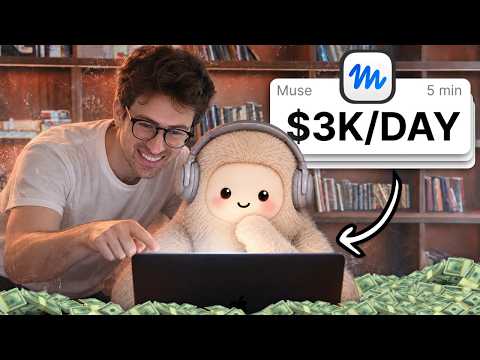
24:35Meta Muse Will Create 1,000 Millionaires
MetaMuse Opportunity MetaMuse (formerly Facebook Muse) offers an arbitrage opportunity to make money online by leveraging AI to mine public data from Facebook groups, Marketplace, and Instagram. The speaker believes this is a significant opportunity, potentially creating thousands of millionaires by connecting buyers and sellers more efficiently than traditional agencies. How MetaMuse Works MetaMuse can identify needs and sources of supply within public online platforms. It cleans and organizes data, creating a valuable asset of contacts with specific needs and pricing. For enhanced functionality, MetaMuse can be integrated with services like Bland AI for a dedicated phone number, enabling calls and texts. Monetization Strategies Service Arbitrage: Act as an intermediary, similar to a night nurse agency, by connecting those who need services with providers found via MetaMuse. Data Asset Creation: Build and own a clean, structured database of individuals and their needs, which could eventually be sold. Owning Platforms: Progress to owning the platforms themselves, such as creating and managing niche Facebook groups or Instagram pages. Levels of Opportunity Level 1: Mining - Extracting valuable information from existing platforms. Level 2: Data Ownership - Cleaning and organizing mined data into a sellable asset. Level 3: Platform Ownership - Establishing and controlling your own online spaces (groups, pages). Level 4: Technology Building - Developing new technology or automated systems based on insights gained. Undervalued Assets Facebook Groups: High user engagement makes them prime targets for MetaMuse. Facebook Business Pages & Instagram Niche Pages: Can be leveraged by MetaMuse for data collection. Practical Application Example Using MetaMuse to find night nurses in a specific city by searching public Facebook groups and Instagram. The AI can then draft messages, make calls (with integration), and help vet potential candidates.
 30:50
30:50Make cool things with AI that people buy (Gemini 4 Argon)
Vibe Marketing with Argon Argon excels at creating highly interactive and unique websites that stand out, moving beyond basic designs. To achieve impressive results, Argon requires good creative references. It can generate viral content for platforms like Twitter and TikTok, which can then be monetized by building a business around the generated audience. Personalized Physical Products (VI Manufacturing) Argon can assist in designing personalized physical products, generating CAD files and embedding customizers into platforms like Shopify. The process involves customers customizing products (e.g., size, color) with a live 3D preview, followed by on-demand 3D printing via services like SLAN 3D or using a personal printer. This opens opportunities for niche physical products and even a service to build these customizers for other businesses. Rebuilding Legacy SAS Products Argon can be used to build improved versions of older, less updated SAS products, particularly by niching down. A strategy involves offering a useful free tool to attract users, then developing paid tools for that user base. Argon can generate functional web applications, even for complex tasks like creating price proposals from site visit notes. Maximizing Argon's Potential (Hacks) Plan: Agree on the build before starting to avoid constant file changes. Sub Agents: Use slash commands for parallel task execution (e.g., research, checking). Goal: Employ slash goal with reference images for better, albeit token-intensive, output. Browser: Utilize slash browser to test user journeys directly within the app. Learn: Turn corrections into reusable project rules or skills for improved future outputs. Mode: Default to "High" mode for generally better output quality.

Focus: Business trends, unconventional opportunities, founder stories
Hosted by Sam Parr and Shaan Puri, My First Million is a podcast on YouTube about business ideas and the people behind them. The format is two friends riffing on opportunities, plus regular founder interviews.
What You'll Learn
- Unconventional business models most people overlook
- How to size up a market and spot trends early
- Real numbers from real businesses (revenue, margins, growth)
- How successful founders think about risk
Why They're Worth Following
The conversational format makes dense business content easy to absorb. They cover businesses you've never heard of (vending machines, niche media, local services) next to tech startups, which is good for widening your sense of what's possible. Episodes run long and clips go up almost daily, so this is a channel where you want to read first and pick one episode a week.
Recent Videos
 48:59
48:592 business ideas, moats and the best stuff we found on X
Business Ideas & Concepts Wedding Guest Service: A website allowing users to pay to attend someone else's wedding, with 20,000 users already. The hosts found this idea unappealing. Men's Skincare/Makeup Line: A potential business idea from influencer Clvicular, drawing parallels to successful beauty brands like Kylie Jenner's. The discussion highlighted the need for strong business acumen alongside influencer status, referencing companies like Congo Brands and Alani Nu. Product & Tech Innovations Tesla Roadster with SpaceX Boosters: Elon Musk unveiled a new Roadster featuring SpaceX rocket boosters, capable of extreme speed and downforce, allowing it to drive upside down on a ramp. The practicality and necessity of this feature were debated. SpaceX Shares for Children: Elon Musk announced plans to give SpaceX shares to every child in America, a move seen as a potential start to a redemption arc for Musk, despite declining favorability ratings. Entrepreneurship & "Moats" Peter Levels' "Moats" Theory: Peter Levels suggests pivoting away from pure SaaS to focus on moats like proprietary data, network effects, audience, distribution, physical reach, capital, and regulatory advantages. Valuable Moats: Network effects and brand were identified as key moats. Businesses that leverage AI to reduce costs while maintaining demand (like Amazon) or focus on in-person human connection (art, sports, hospitality) are seen as strong. Personal Development & Lifestyle Brian Johnson's Dunking Goal: Brian Johnson (49) aims to dunk a basketball, setting a performance benchmark for his fitness and aging journey. The hosts debated his ability to achieve this. Alexander Wang on Failure: Alexander Wang believes taking risks is essential in a changing world and that failure is not as important as the magnitude of wins. Founder Psychology & Fear: Fear is identified as a major inhibitor for founders. Overcoming fear and avoidance leads to faster, better decisions and simpler products. Creative Pursuits: Inspired by Tim Ferriss, the idea of a "creative gym session" to charge one's battery and enter a flow state was discussed, contrasting with purely functional or work-related activities. Content & Media Consumption YouTube Algorithms: The hosts shared their unusual YouTube algorithm content, including fried rice tutorials, succession clips, music, and children's shows, highlighting how content reflects personal interests and family life. "Plant Daddy Sketching": Kevin from Epic Gardening's journey from gardening influencer to a successful business owner and his new skill of sketching was highlighted. Business Case Study Howdy D Pest Control: A real estate agent launched a pest control business with modern branding, inspired by the podcast, and achieved $1,000 in revenue in its first week.
 53:40
53:40We watched the 3hr Elizabeth Holmes doc so you don’t have to
Movie Overview & Premise The documentary focuses on Elizabeth Holmes 34 days before she was due to go to prison. Filmmaker Nathan Fielder moved in with Holmes and her fiancé, living with her for 34 days and continuing to pursue the story in secret for three years. The film debuted at the Telluride Film Festival and has received exceptional reviews, becoming one of the top-rated documentaries. Elizabeth Holmes's Defense & Actions Holmes is going to jail for defrauding investors by raising $500 million on the premise of a revolutionary blood testing machine called "Edison." The Edison machine could only perform a fraction of the claimed tests, and the company secretly used conventional machines, passing off results as their own. Holmes denies wrongdoing, claiming the machine could work in the future or that she believed what she said was true. She avoids admitting to lying, focusing on the intent of her statements. She claims to be confused as to why she is going to jail and insists she has never lied, only "trying to tell the truth." Nathan Fielder's Documentary Techniques The film is shot very closely, often at a "face-to-camera" distance, emphasizing Holmes's intense, unblinking eye contact. Fielder uses hyperrealistic reenactments, including recreating prison settings, to portray events he couldn't film directly. A significant technique involves bringing in the actress who played Holmes in the Hulu series to watch footage, creating a meta-narrative and questioning the nature of portrayal and truth. Key Relationships & Suspects Billy, Holmes's fiancé, is portrayed as an "alpha" figure who seems to control situations and her actions, even asking A24 for a piece of the movie's profit. The film draws parallels between Holmes's relationship with Billy and her previous relationship with Sunny Balwani, suggesting he may have been the true mastermind. Billy is shown to be controlling, even impersonating Holmes on social media after her imprisonment. Themes & Audience Reaction The documentary intentionally leaves viewers confused, mirroring the experience of being deceived by Holmes. It explores the fine line between "faking it till you make it" in Silicon Valley and outright fraud, especially in high-stakes fields like healthcare. The film questions who is truly guilty, suggesting everyone involved, including Billy, the filmmakers, and the media, shares some culpability. The "Who's on First" scene is highlighted as a genius moment that creates doubt about Holmes's understanding or willingness to admit fault. Impact & Verdict The film is considered a "10" by some viewers, praised for its astonishing nature, secretive production, and ability to provoke deep post-viewing discussion. Nathan Fielder is seen as a major winner, likely achieving widespread fame. Holmes is also considered a winner, as the film may reposition her narrative. The documentary leaves a lasting impression, making viewers question reality and perception, aligning with the film's title, "You Can See Everything."
 46:09
46:09This guy beat the S&P500 for 11 years doing (almost) nothing
Investing Strategy A public investor achieved a 21.8% annual return over a decade, significantly outperforming the S&P 500's 13.5%. He made an average of only 2.9 investment decisions per year, with some years having zero decisions. His strategy involves deep study of a few understandable companies and waiting for opportune moments to invest. Decision-Making Principles Successful individuals often make very few, high-impact decisions rather than many small ones. Distinguish between reversible and irreversible decisions to avoid agonizing over minor choices. Know your circle of competence and decline opportunities outside your expertise. Write down ideas and conduct pre-mortems to identify potential failures. Leadership and Mindset Effective leaders, like Mark Zuckerberg, seek diverse insights and possess clarity in communication and strong execution beliefs. Zuckerberg values talent density and maintaining a flat organizational structure for AI development. Humble leaders constantly seek input and assess talent by observing who provides high signal advice. The Dunning-Kruger effect suggests that greater expertise often leads to a better understanding of one's own knowledge gaps. Navigating Fear and Uncertainty The anticipation of an event can often be more intense than the event itself. For fearful situations, actively prepare by replicating the conditions of the event to acclimate your nervous system. Acceptance of a situation can neutralize a significant portion of fear, allowing for a more proactive mindset. The DARE method (Dismiss, Allow, Run Towards, Engage) can be used to manage panic and fear.
4. Codie Sanchez
Focus: Buying small businesses, "boring" business acquisition, cash flow
Codie Sanchez built her brand around buying small, unglamorous businesses (laundromats, car washes, service companies) and running them better. Her content is about buying something that already works instead of starting from zero.
What You'll Learn
- How to buy an existing business instead of building one
- Due diligence basics for small acquisitions
- "Boring business" playbooks: services, B2B, local
- How to read cash flow, multiples and deal structures
Why She's Worth Following
Most business content assumes you're building from scratch. Sanchez's angle is different and often more practical: buy something with customers and cash flow, then improve it. Her videos are numbers-heavy and take the mystery out of a process most people assume needs millions. Some of her newer uploads lean toward money psychology and mindset, so it pays to skim before you commit to a video.

Focus: Creator economy, productivity, building an online business
Ali Abdaal went from doctor to full-time creator and built a business around content, courses and community. His channel sits where productivity meets entrepreneurship, and lately it includes experiments with AI inside his own business.
What You'll Learn
- How to build a creator business: audience, products, revenue streams
- Productivity systems that hold up for busy people
- The economics of YouTube and online content
- How he uses AI tools and hires inside a small online business
Why He's Worth Following
Abdaal is unusually open about how his business runs. The content has moved from pure productivity tips toward real business strategy. If you're building anything online, whether a YouTube channel, a newsletter or a SaaS, his frameworks for audience growth and monetization carry over directly.
Honorable Mentions
Didn't make the top five, but worth adding depending on what you're building. All of these were uploading in September 2026:
- Y Combinator: Startup advice from YC partners and founders. Best for tech founders, and the Startup School material is still some of the best free founder education on YouTube.
- Starter Story: Pat Walls interviews founders about how they built their businesses, with real revenue numbers. In 2026 a lot of it is solo founders shipping with AI coding tools.
- Lenny's Podcast: Long interviews on product, growth and hiring. Best for product-minded founders.
- All-In Podcast: Weekly tech, markets and politics from four investors. Good for the macro picture, less for tactics.
- The Futur: Chris Do on creative businesses, pricing and client work. Useful for agency owners and freelancers.
How to Actually Keep Up With All These Channels
Here's the honest problem: follow just these five and you'll get well over 100 uploads a month once you count Shorts and clips. Even skipping the Shorts, it's hours of long-form video every week.
You have three options:
- Watch everything at 2x speed. Still hours a week. Not realistic if you're also running something.
- Pick based on titles and thumbnails. Works, but titles are written to get clicks, not to tell you what's inside.
- Read summaries first. Get the key points of every new video, then watch only the ones that matter for what you're working on.
Option 3 is what TubeScout does. You pick the channels, and every morning you get one email with a short summary of each new video. Read a summary in a minute and decide whether the full video earns your time.
Get new videos from these channels summarized in your inbox. Your first 7 digests are free.
Frequently Asked Questions
Which business YouTube channel is best for beginners?
Start with Alex Hormozi if you want tactical, step-by-step business advice. His content assumes no prior business experience and breaks down fundamentals clearly. My First Million is also great for beginners because the conversational format makes complex topics accessible.
Are business YouTube channels better than an MBA?
For practical, applicable business knowledge, yes. MBA programs teach theory and frameworks. Business YouTube teaches what's working right now, from people doing it. The gap is networking and credentials, which MBAs still provide. But for actual business skills, YouTube is faster, cheaper, and more current.
How do I avoid productivity porn and actually apply what I learn?
Set a rule: after every video, write down one specific action you'll take this week. If you can't identify one, the video wasn't useful. Also, limit consumption to 3-4 videos per week and spend the rest of your time executing.
Which channels are best for online business specifically?
Ali Abdaal and Greg Isenberg are most focused on internet-native businesses. Hormozi's frameworks also apply to online businesses but originated in brick-and-mortar. For SaaS specifically, look at Y Combinator's Startup School content, and Starter Story for solo founders sharing real revenue numbers.
How often should I watch business YouTube?
Two to three times per week, maximum. The returns diminish fast. One great insight applied beats 50 insights consumed. Use TubeScout's daily digests to scan everything quickly, then only watch the videos that are directly relevant to what you're working on this month.
Can I get summaries of these channels by email?
Yes. TubeScout sends one email every morning with a short summary of each new video from the channels you pick, including all five on this list. Your first 7 digests are free and you don't need a credit card. After that, plans start at $3/month for 20 channels.
Marc Page
Founder, TubeScout
Building tools to help knowledge workers learn faster